Home Water Filtration Guide for Singapore HDB & Condo
Singapore's municipal water supply meets World Health Organisation guidelines before it reaches your tap. PUB tests treated water against over 300 parameters and publishes results annually. That said, the final stretch of delivery — from the street main through internal building pipes to your kitchen faucet — introduces variables that some residents prefer to address with point-of-use filtration.
Older HDB blocks built before the mid-1990s may still have galvanised iron internal pipes, which can contribute trace amounts of rust and sediment at the tap. Newer developments use copper or PPR piping, but tank storage systems in certain condominiums may also affect taste. These are the practical reasons behind the growing residential filtration market in Singapore, which now exceeds SGD 180 million annually according to SFA estimates.
Three Dominant Filtration Technologies
Activated Carbon Filtration
Granular or block activated carbon filters adsorb chlorine, volatile organic compounds (VOCs), and compounds responsible for taste and odour. They are the most affordable residential option, typically costing SGD 80–150 annually for filter replacements.
Carbon filters do not remove dissolved minerals, heavy metals, or microbiological contaminants. In Singapore's context, where tap water is already microbiologically safe, carbon filtration primarily improves aesthetic water quality — specifically the residual chlorine taste that some people find noticeable.
Best suited for: Residents who want improved taste at minimal cost with countertop or faucet-mounted installation that requires no plumbing modifications.
Ultrafiltration (UF)
UF systems use hollow-fibre membranes with pore sizes around 0.01 microns. At this filtration level, bacteria, protozoan cysts, and larger viral particles are physically excluded, while dissolved minerals pass through intact. This means UF-treated water retains calcium, magnesium, and other minerals present in Singapore's municipal supply.
UF systems produce minimal wastewater (less than 5% reject), require no electricity in gravity-fed configurations, and have lower maintenance costs than RO. Annual filter costs typically range from SGD 120 to SGD 250.
Best suited for: Households that want pathogen protection beyond municipal treatment while retaining the mineral content of tap water. Particularly relevant for families with young children or immunocompromised members.
Reverse Osmosis (RO)

Residential RO systems operate on the same principle as the industrial units in NEWater plants, scaled down for household use. Water is pressurised against a semi-permeable membrane that rejects 95–99% of total dissolved solids (TDS), including heavy metals, fluoride, nitrates, and pharmaceutical residues.
The trade-off is significant wastewater generation. Most household RO units produce 3–4 litres of reject water for every litre of purified output. In Singapore, where water tariffs include a water conservation tax, this adds a measurable cost. Annual operating expenses (filters plus water waste) typically range from SGD 200 to SGD 450.
RO also strips beneficial minerals. Some systems include a post-mineralisation stage to add calcium and magnesium back, but these cartridges increase both complexity and replacement cost.
Best suited for: Residents specifically concerned about dissolved contaminants (heavy metals, TDS) or those with medical conditions requiring very low mineral content water.
Installation Considerations for Singapore Homes
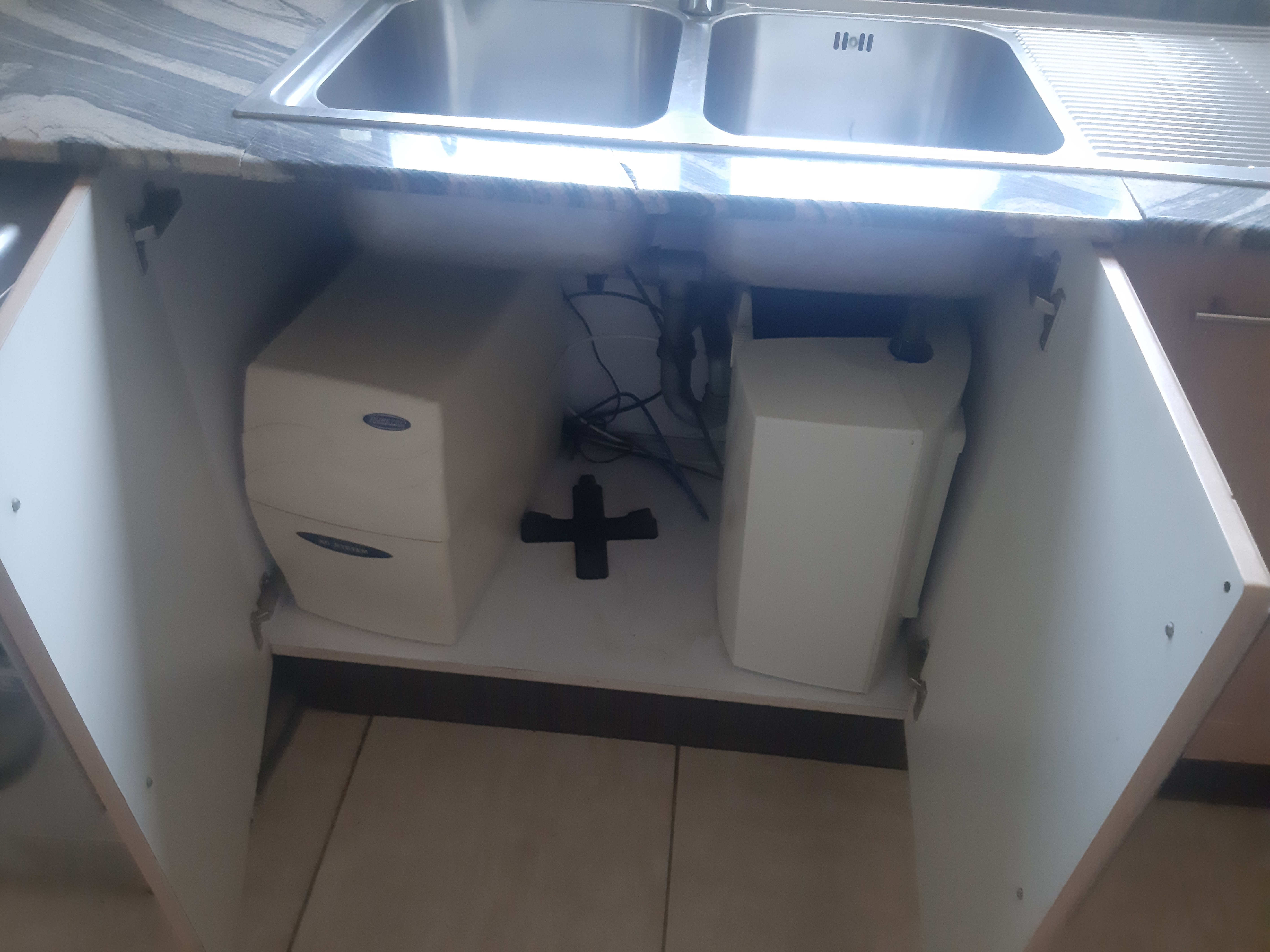
Space is the primary constraint. In a typical HDB 4-room flat, the kitchen counter area measures approximately 2–3 metres of usable length. Under-sink installations are popular because they preserve counter space, but require a dedicated faucet hole or the replacement of an existing tap.
- Countertop units — No installation required, portable, but occupies 20–30cm of counter space. Suited for renters.
- Faucet-mounted — Attaches directly to existing tap. Quick setup, but limits tap functionality and may not fit all faucet types.
- Under-sink systems — Hidden installation, dedicated purified water tap. Requires basic plumbing work. Most common in owner-occupied HDB and condo units.
- Whole-house systems — Installed at the main water entry point. Rarely used in HDB due to pipe configuration. More common in landed property.
Cost Comparison: Annual Operating Expenses
| System Type | Upfront Cost (SGD) | Annual Filters (SGD) | Water Waste Cost (SGD/yr) | Total Annual (SGD) |
|---|---|---|---|---|
| Carbon (Countertop) | $50 – $180 | $80 – $150 | $0 | $80 – $150 |
| UF (Under-sink) | $200 – $500 | $120 – $250 | ~$5 | $125 – $255 |
| RO (Under-sink) | $300 – $800 | $150 – $350 | $50 – $100 | $200 – $450 |
| RO + Mineraliser | $500 – $1,200 | $180 – $400 | $50 – $100 | $230 – $500 |
Prices based on 2025–2026 retail data from major Singapore electronics and home appliance retailers. Water waste cost calculated at current PUB domestic tariff of SGD 3.69/m³ (effective from 2025).
Water Quality Testing Before Buying
Before investing in filtration, testing your actual tap water provides the most rational basis for choosing a system. Basic TDS meters cost SGD 15–30 and measure total dissolved solids in parts per million (ppm). Singapore tap water typically reads between 80–180 ppm, which is well within acceptable ranges.
For a more comprehensive analysis, PUB publishes annual water quality reports covering all service reservoirs. If you suspect building-specific contamination (e.g. from ageing internal pipes), independent labs accredited under SAC-SINGLAS can test for specific metals and microbiological parameters. Expect to pay SGD 80–200 for a standard residential water panel.
Maintenance and Filter Replacement
No filtration system operates indefinitely. Cartridge lifespan depends on water volume processed and the specific contaminant load:
- Carbon filters: Replace every 3–6 months or per 2,000–4,000 litres, whichever comes first
- UF membranes: Replace every 12–24 months depending on manufacturer specification
- RO membranes: Replace every 24–36 months; pre-filters (sediment, carbon) require more frequent changes at 6–12 month intervals
- UV lamps: Replace annually regardless of water volume; lamp intensity degrades over time even when functioning
Neglecting filter replacement is counterproductive. An exhausted carbon filter can release previously captured contaminants back into the water stream. Biofilm growth on expired UF membranes can introduce bacteria that were not present in the unfiltered supply.